
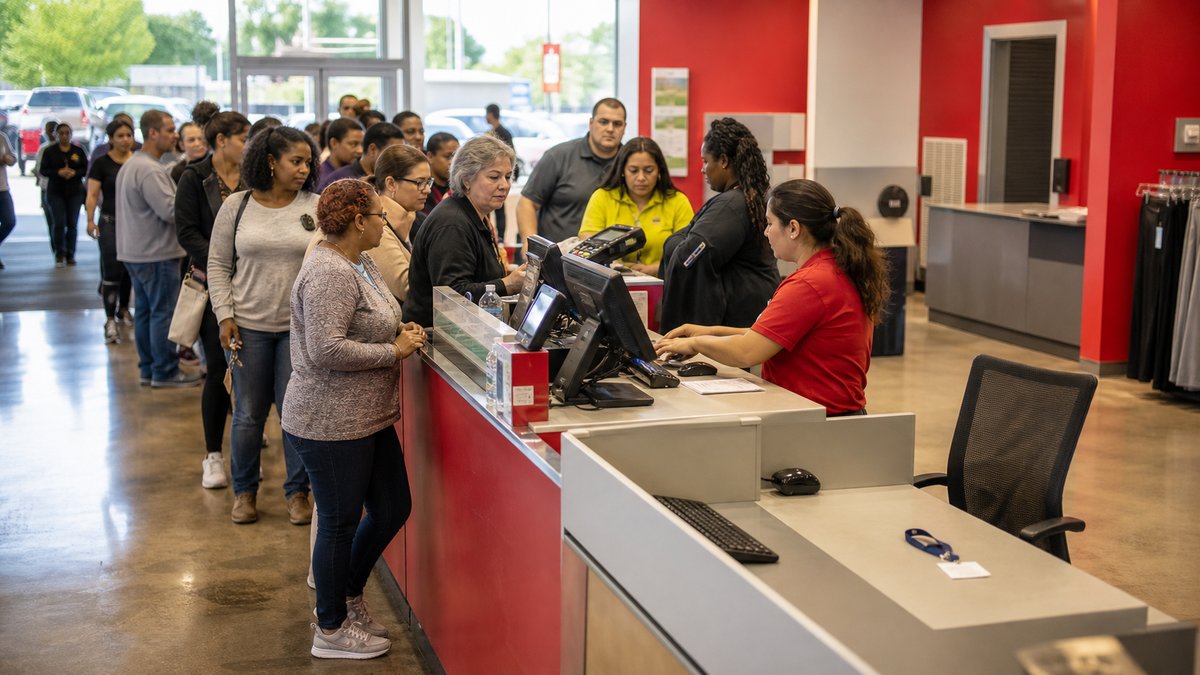
Attendance is usually treated as an employee-relations issue. A shift is missed, a point is assigned, and the manager follows policy. The customer experiences something else: a longer line, a closed station, a rushed handoff, or an employee who has no time to recover a mistake. The policy may live in human resources, but its consequences arrive at the counter.
Target's reported move toward a point-based store attendance system reflects a familiar operating pressure. A stricter policy can improve predictability, but discipline alone cannot create capacity. If schedules are posted late, availability is outdated, or every shift is built at the minimum possible staffing level, the organization has designed fragility into the operation.
The better approach begins by connecting attendance data to demand: track when absences occur, how much notice is provided, and what customer outcomes change when coverage drops. Managers also need options before the line forms: cross-training, voluntary standby lists, shift-swapping rules, and clear authority to adjust service.
An attendance policy is successful when it creates reliable coverage, not when it produces a perfect record of points.